
Apprenticeships that Work
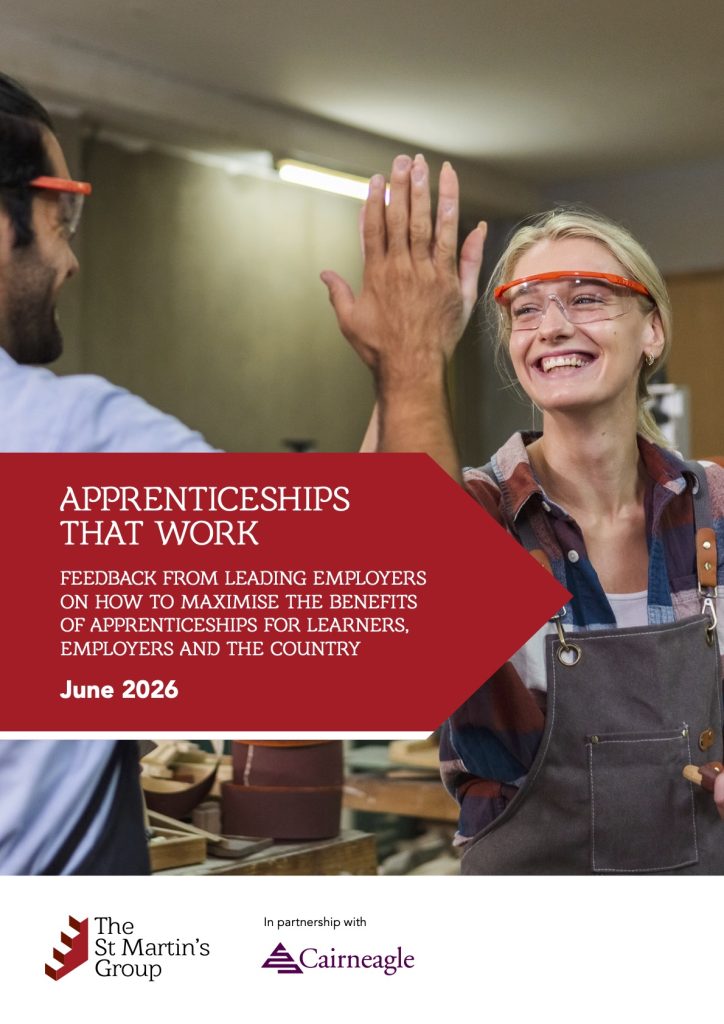
The St Martin’s Group has today (June 2026) published a new report building on its Ipsos polling from last year, which surveyed over 800 employers. While the survey identified broad trends and patterns, this qualitative research explores the drivers behind those findings in greater depth. The report, Apprenticeships That Work: Feedback from leading employers on how to maximise the benefits of apprenticeships, brings together insights from 40 large levy‑paying employers, collectively representing over two million employees and accounting for approximately 20% of apprenticeships across England.
Skills For All
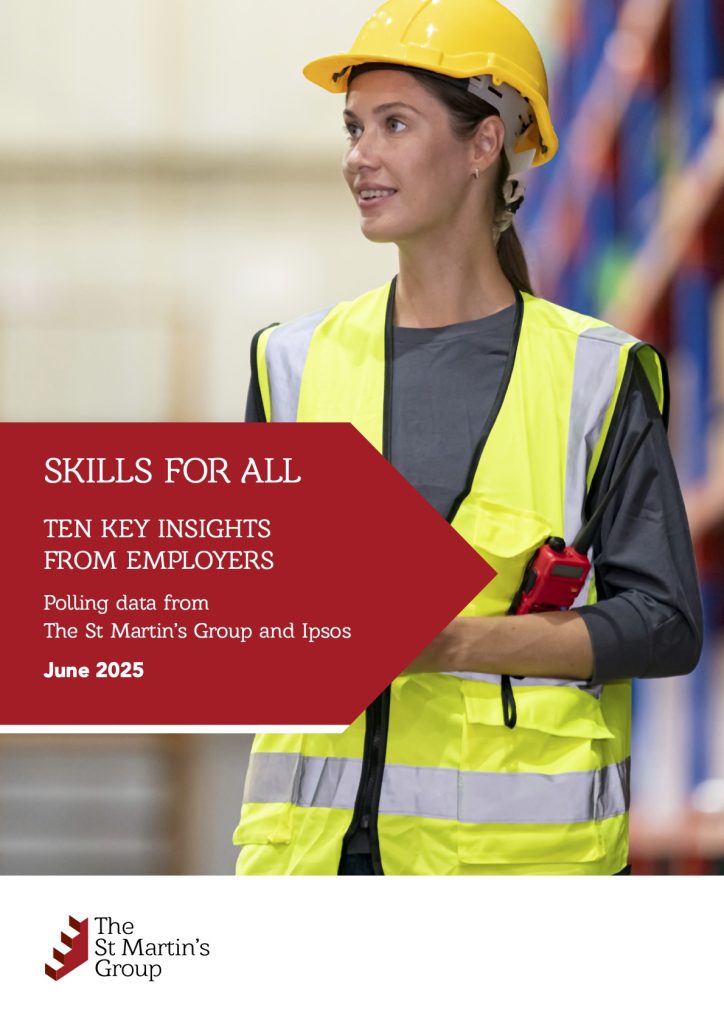
The St Martin’s Group has today (4th June 2025) published a new report calling for inclusive, employer-led skills reform. The report, Skills for All: Ten Key Insights from Employers, reveals that when addressing a skills gap, more than half of employers surveyed said that, in the event of a skills gaps, they typically prioritise developing existing staff over hiring externally and that a national skills policy that supports all ages and all levels would best benefit their organisation.
Overcoming Barriers to Opportunity
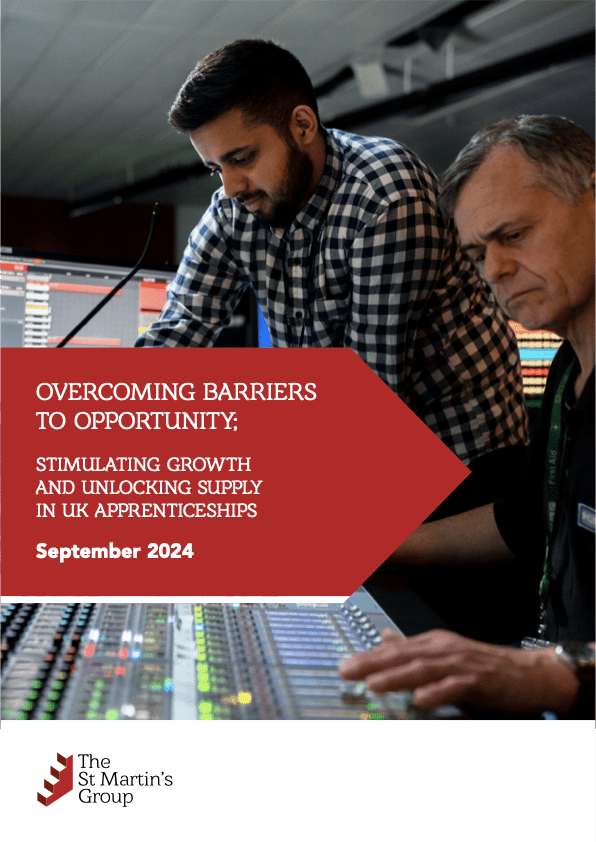
The St Martin’s Group has published a new report highlighting the need to protect and expand apprenticeship opportunities in the UK. The report, titled “Overcoming barriers to opportunity; Stimulating Growth and Unlocking Supply in UK Apprenticeships,” underscores the growing demand for apprenticeships and the critical steps needed to meet this demand.
Enabling Better Outcomes

The St Martin’s Group is pleased to publish its new report ‘Enabling Better Outcomes: A Wider View of Apprenticeship Success’, which investigates what apprenticeship success looks like to employers.
This report, which builds on our previous report which shared the apprentice perspective on apprenticeship outcomes and destinations, finds that 99 per cent of employers recognise the benefits of offering apprenticeships, but face barriers in supporting apprentices to complete them.
Conducting this research, produced in partnership with Learning and Work Institute (L&W), more than 800 apprenticeship employers were surveyed to better understand what leads to successful completions and any challenges they face.
Apprenticeship Outcomes & Destinations
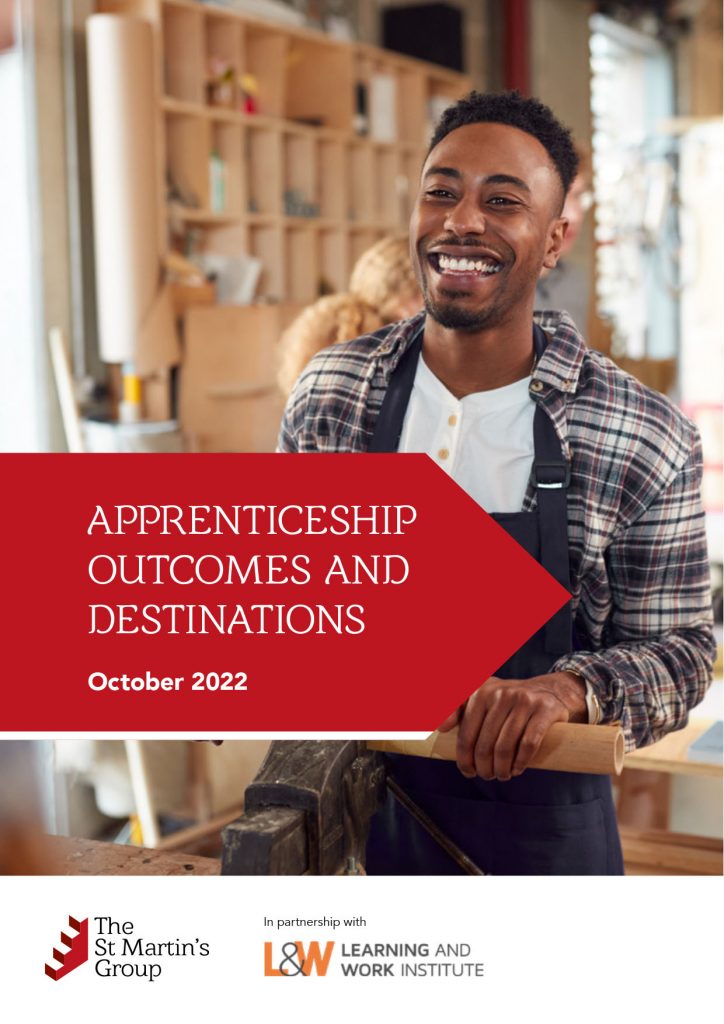
The St Martin’s Group is pleased to publish its report “Apprenticeship outcomes and destinations”, which investigates why there is a large cohort of apprentices who do not complete their apprenticeship and what steps can be taken to resolve this.
The issue of high non-completions has long plagued both policymakers and the wider Further Education sector. This research, conducted by Learning and Work Institute, aims to answer fundamental questions about who are the apprentices withdrawing from their programmes, what their reasons were for withdrawal and what additional support might have encouraged them to complete.
Our report provides the first detailed comparison of what happens to apprentices who complete or withdraw from their programme and has provided insights into why 48 per cent of new apprentices withdraw from their course, while also confirming the benefits to individuals, employers and the economy of completing an apprenticeship.
The Real Costs And Benefits Of Apprenticeships
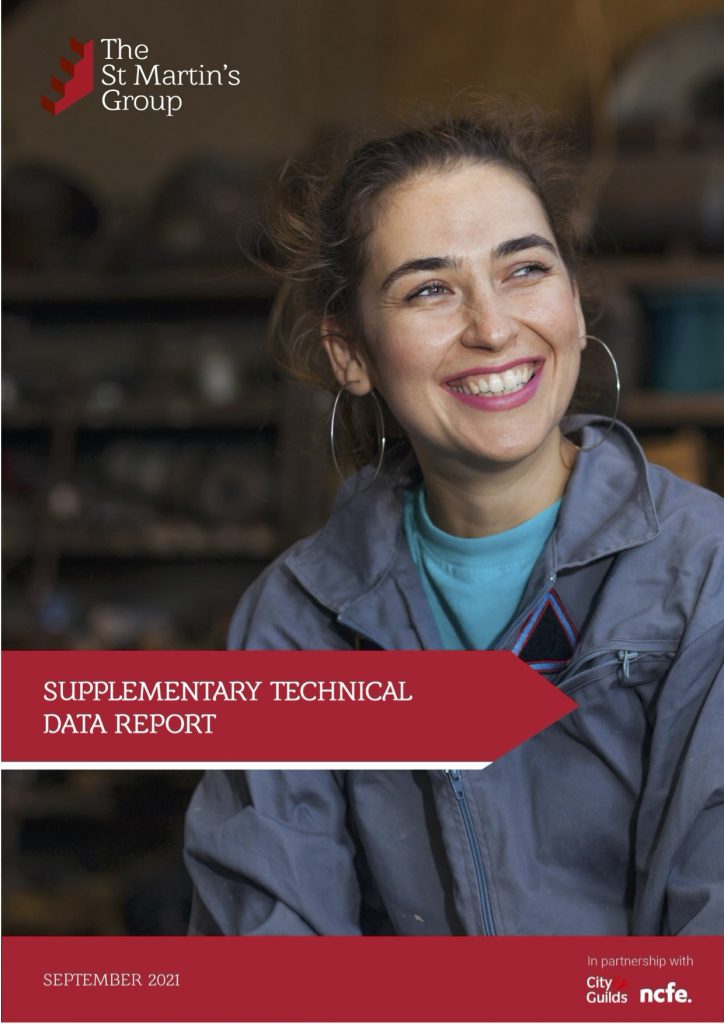
The St Martin’s Group, in partnership with City & Guilds and NCFE, is proud to publish the report, ‘The Real Cost and Benefits of Apprenticeships’, to shed light on the true value apprentices can bring to the workplace. The report emphasises that many of the additional upfront costs associated with onboarding apprentices can be recovered much earlier than anticipated, with apprentices on average, generating an early net benefit to businesses of at least £2,496 and in some cases significantly more, even during the training period.
It is hoped this report will help encourage greater support for apprenticeships from government and business alike, particularly as we seek to strengthen the economy and provide more meaningful training and employment opportunities as part of the Covid-19 recovery strategy.